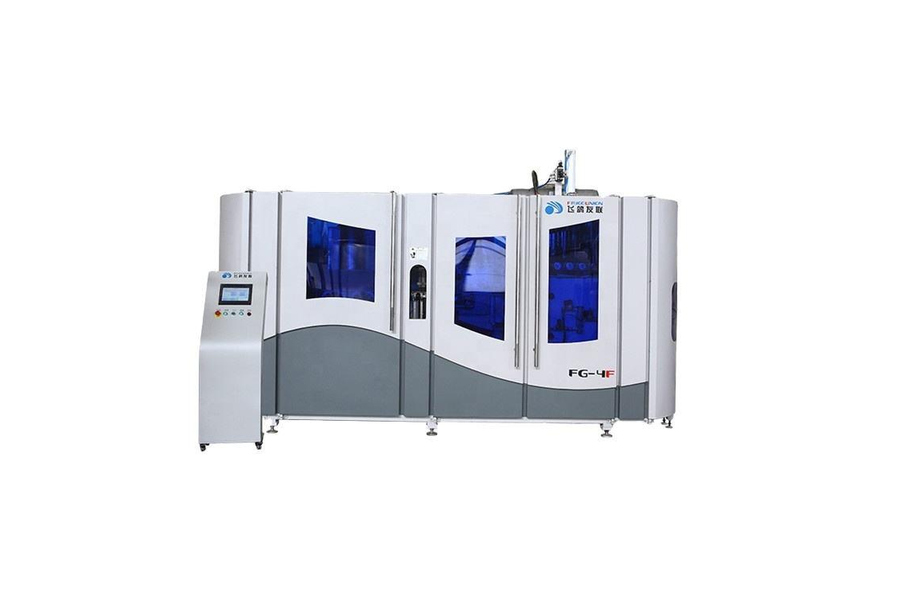
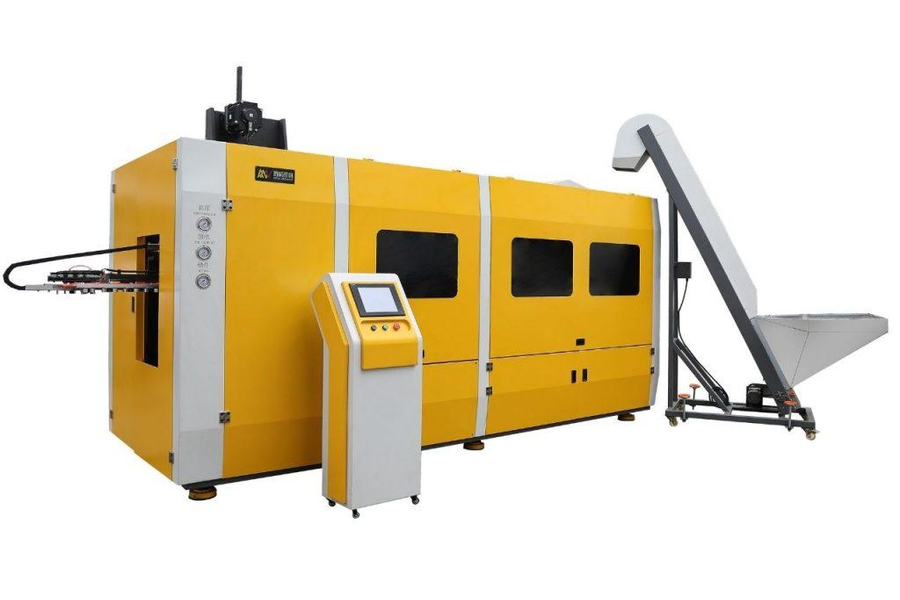
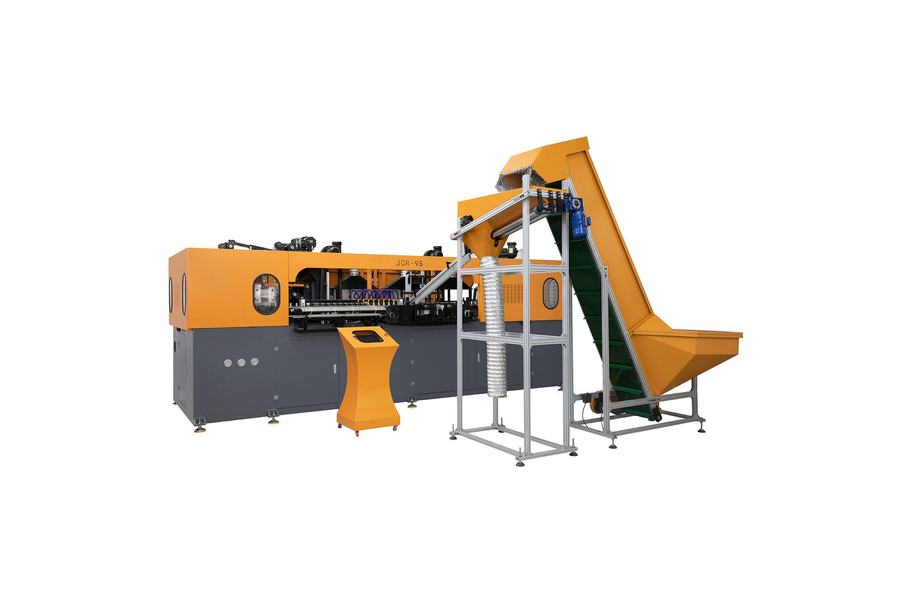
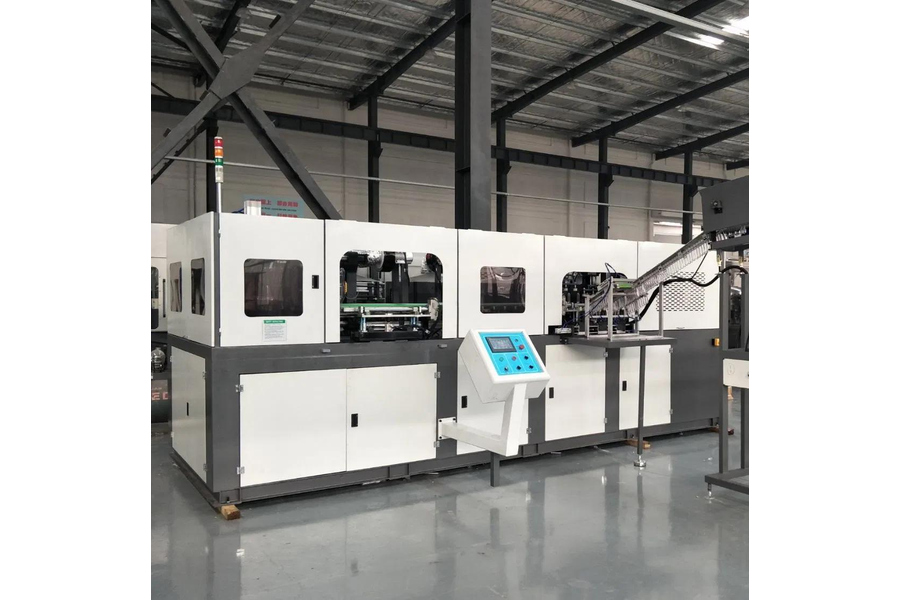
Plastic blow molding machines are classified based on the technology used and the product shaping method. Each type has its specific application depending on the product size, type of plastic, and required output.
1. Injection Blow Molding Machines (IBM)
In this type, molten plastic is first injected into a mold to create a preform (a preliminary shape resembling a tube or test tube). This preform, while still hot, is then transferred to the blow mold to achieve the final, precise shape.
• Main applications: Very small and precise containers such as eye drops, medicine bottles, and cosmetic boxes.
• Advantages: Very high precision in the details of the bottle neck, and no plastic waste.
2. Extrusion Blow Molding Machines (EBM)
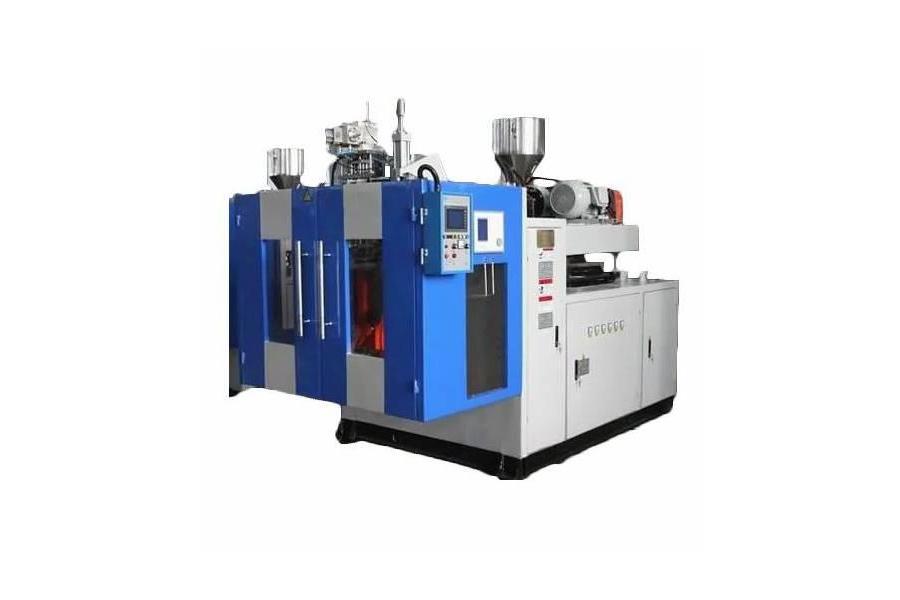
This is the most common and versatile method in the plastics industry. Molten plastic is extruded (compressed) into a hollow tube called a parison. The molding die is then closed around it, and air is pumped in to mold the plastic into the shape of the outer mold.
There are two main types:
- Continuous Extrusion: The plastic is extruded continuously without interruption, making it excellent for small and medium-sized containers.
- Accumulator Head Blow Molding: A large quantity of molten plastic is collected in a heating tank and then extruded all at once. This method is designed for very large products and containers.
• Prominent applications include: detergent bottles, water drums, car tanks, and large children's toys.
3. Stretch Blow Molding (SBM) Machines:
This method involves mechanically stretching the plastic (preform) using a stretch rod in conjunction with high-pressure air blowing. This biaxial stretching rearranges the plastic molecules, giving the product exceptional rigidity and very high crystalline transparency.
It is further divided into:
- One-Step: The preform is injected, blown, and molded in the same machine in stages.
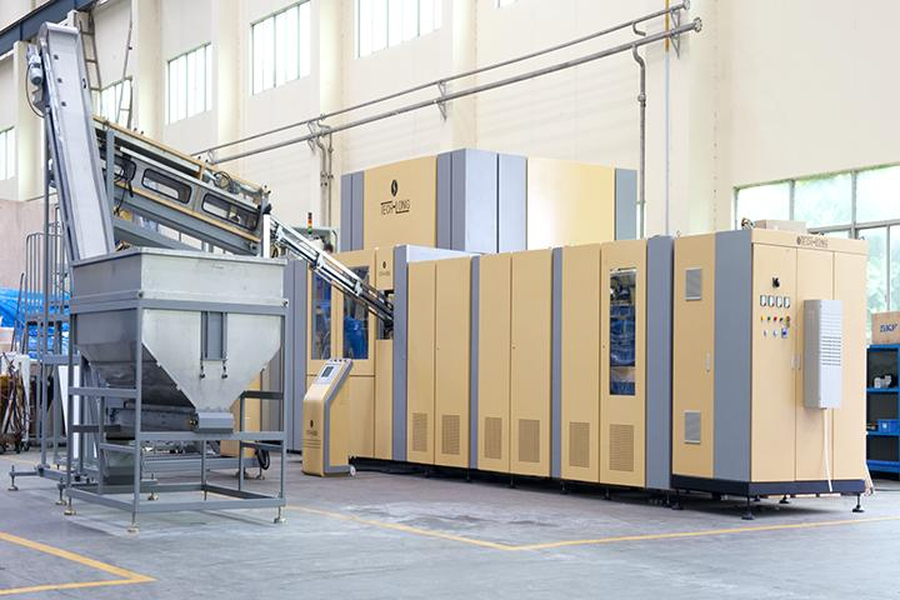
- Two-Step: Preforms are purchased ready-made and chilled (or pre-made), then fed into a separate blow molding machine that reheats them in convection ovens before blowing and shaping them.
Main uses: Mineral water bottles, soft drink bottles, and clear cooking oil bottles (often made of PET).
The automatic PET blow molding machine is designed for high-volume production. It offers maximum productivity, precision, and automation while reducing labor costs and ensuring consistent product quality.
Key Features:
- Fully automatic preform feeding system.
- High-speed production.
- PLC control with touch-screen interface.
- Servo-driven technology for energy efficiency.
- Stable and reliable operation.
- Low maintenance requirements.
Applications:
- Bottled water.
- Carbonated beverages.
- Juice bottles.
- Dairy products.
- Household chemicals.
- Personal care packaging.
Production Capacity:
2,000–10,000+ bottles per hour, depending on the number of cavities.