
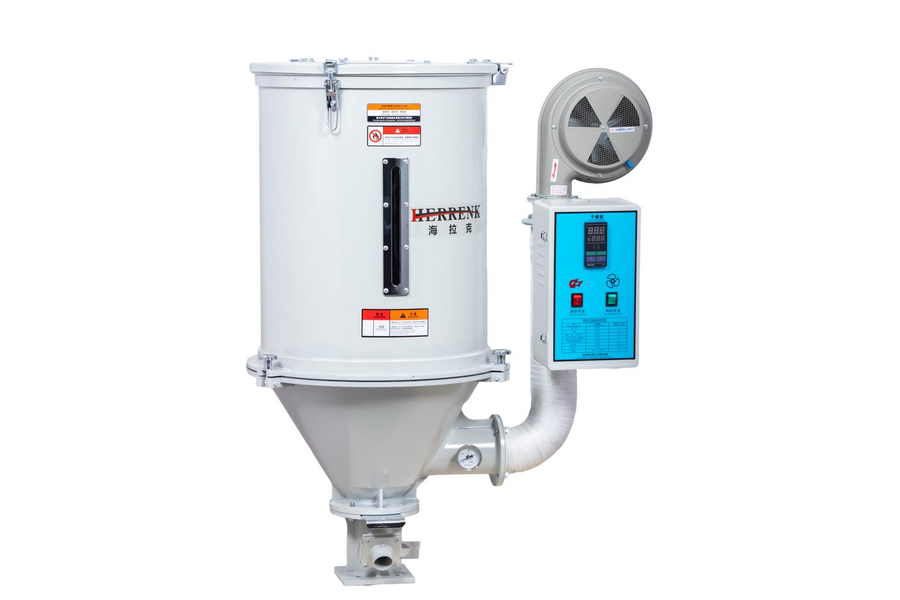
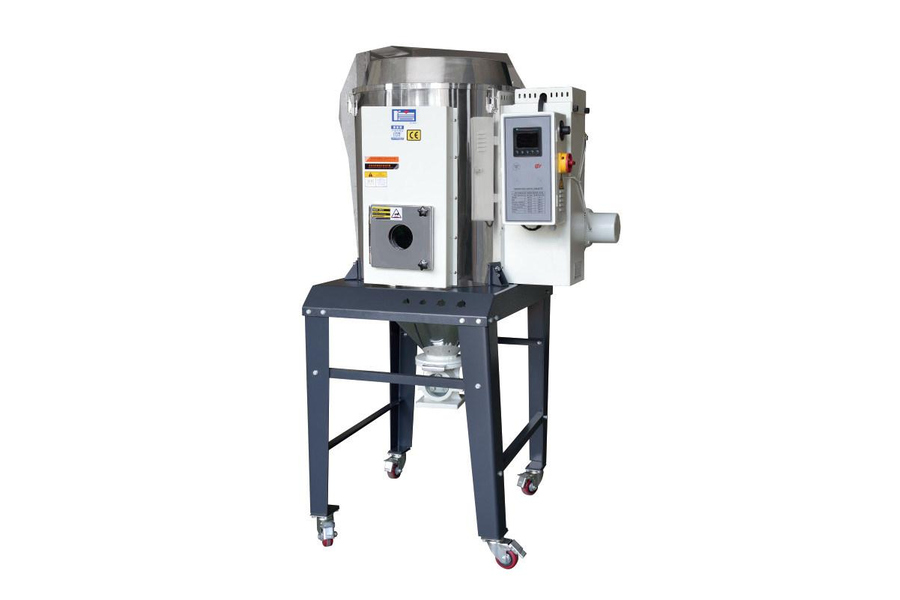
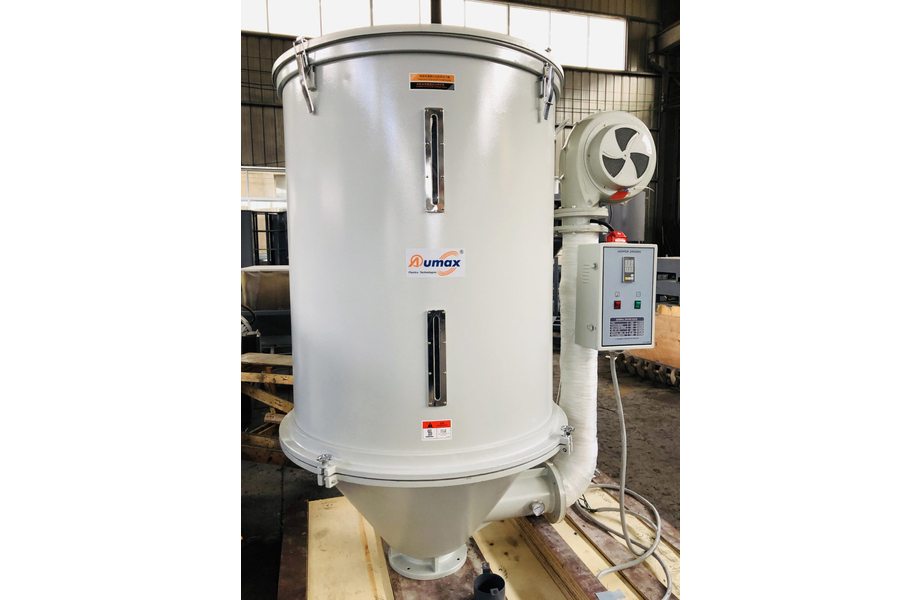
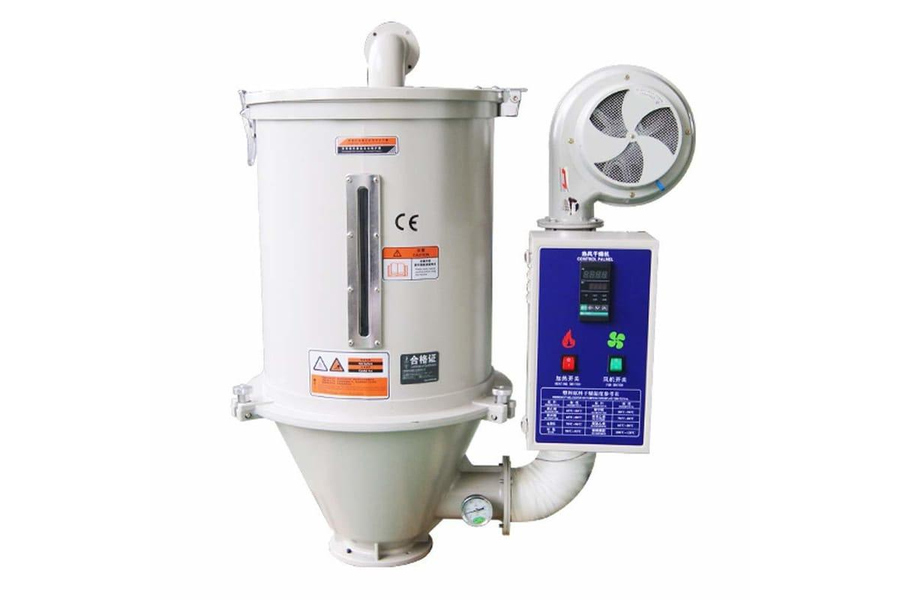
Auxiliary equipment is essential for improving the efficiency, productivity, and quality of the plastic injection molding process. These machines support material handling, cooling, drying, temperature control, and automation.
The hopper dryer is essential equipment in plastic production lines, as it removes moisture from raw material granules before they enter the injection molding or extrusion machine. This process helps improve the quality of the final product and reduces defects caused by moisture, such as bubbles, silver lines, and reduced mechanical properties.
The device utilizes hot air circulation within the drying hopper to ensure even heat distribution around the plastic raw materials, achieving efficient drying and maintaining a stable temperature throughout operation. It can also be directly connected to plastic injection molding machines for continuous feeding of dry material, increasing production efficiency and reducing downtime.
The hopper dryer features a robust design made of corrosion-resistant materials and a precise temperature control system that ensures the drying of various types of plastic raw materials according to their specific requirements. It also contributes to reducing waste, improving finish quality, and increasing production process stability, making it an essential investment for factories striving for the highest levels of quality and productivity.
Why choose a hopper dryer?
The dryer ensures that raw materials are ready for processing in the best possible condition, directly impacting the quality of plastic products and reducing rejection and rework rates. It is also characterized by its ease of operation and maintenance, energy efficiency, and ability to operate continuously, making it suitable for various production lines and factory sizes.
Applications
The Hopper Dryer is used with plastic injection molding machines, extrusion machines, blow molding machines, and plastic recycling lines. It is suitable for drying various raw materials such as ABS, PC, PET, PA, PMMA, PBT, and other materials that require dehydration before processing to ensure optimal performance and quality of the final product.